
2019
1.7M+
Data Streams Analyzed
NPS in post-cruise surveys

How AIDA Cruises Scaled Feedback Analysis from Small Samples to 1.7M+ Guest Comments
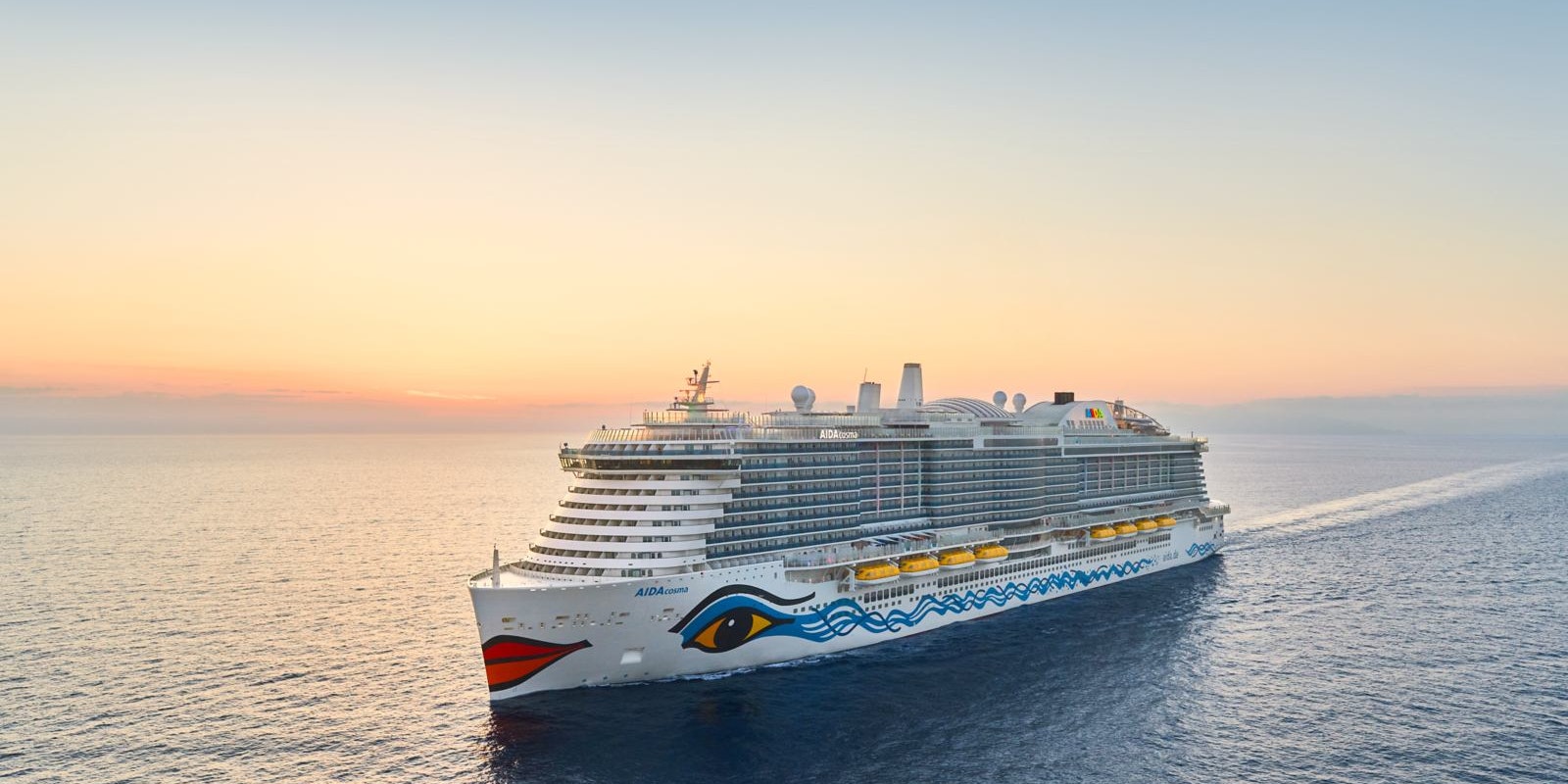
AIDA Cruises, the market leader for cruises in Germany, is part of Carnival Corporation & plc, a tourism company with eight of the world's leading cruise lines. AIDA Cruises itself is the third-largest German tour operator, the best-known cruise brand and one of the most successful tourism companies in Germany.
AIDA Cruises offers cruises to over 350 ports around the world. An AIDA vacation offers guests of all ages a varied on-board program, culinary diversity, premium entertainment, unforgettable shore excursions, numerous sports activities and wellness areas to relax. The trademark of the fleet is the characteristic kissing lips on the bow of the ships.
Understanding what makes each cruise memorable (and what doesn't) is key to their mission. Guest feedback plays a critical role in shaping CX decisions across the fleet.
We spoke with Stephanie Arndt and Joana Kuehn from AIDA's Market Research team about how they use Caplena to analyze post-cruise survey feedback and drive insights-led decisions.
The Challenge: Sample-Based Analysis Led to Partial Insights
Every week, AIDA Cruises receives thousands of open-text responses from their post-cruise surveys. Guests often comment on multiple aspects of their cruise in a single response, sometimes in long and detailed texts. This made manual analysis increasingly difficult.
Before implementing Caplena, the market research team analyzed this feedback manually using Excel-based workflows, including keyword searches and manual categorization. Due to the large volume of feedback, analysis was typically conducted on subsamples rather than the complete dataset.
"We knew there was valuable information in our open feedback, but manually analyzing only subsamples meant we couldn't always be confident about the overall picture.”
We knew there was valuable information in our open feedback, but manually analyzing only subsamples meant we couldn't always be confident about the overall picture.”
Stephanie Arndt
Manager Market Research
As feedback volumes piled up, the limitations of this approach became clear:
Subsamples did not always reliably reflect overall guest sentiment.
Usually, only one open-ended question was analysed manually, rather than all open-text questions.
Manual coding required significant time and effort and was prone to inconsistencies
Providing clear explanations behind key CX metrics, particularly Net Promoter Score, became increasingly difficult
To gain deeper insights into what drives guest satisfaction, the team needed a solution that could process all guest feedback in a structured, transparent, and scalable manner.
Why AIDA Cruises Chose Caplena for Feedback Analysis
In 2019, the team evaluated several feedback analysis platforms. Their key criteria were setup effort, flexibility, ease of use, and alignment with their specific business needs.
What set Caplena apart:
Analyst control: AI speeds up the process, but analysts stay in the driver's seat
Transparent results: Clear visibility into how feedback is categorized
Built for complexity: Designed to analyse nuanced, open-ended feedback across sources and languages
Flexible exploration: With interactive filters, analysts can seamlessly move between strategic overviews and detailed, granular insights, adjusting focus as needed
Scalable: Handle growing feedback volumes without slowing down
End-to-end insights: Feedback categorization, sentiment analysis, driver analysis, and AI summaries work together to give teams a complete picture of the guest experience
Data protection: Function to anonymize open-ended feedback
"We chose Caplena as it was simple, understandable, and affordable."
We chose Caplena as it was simple, understandable, and affordable."
Stephanie Arndt
Manager Market Research
Unlike black-box AI tools that provide answers without explanation, Caplena gave the team confidence in their analysis while reducing the manual workload.
Implementation: From Manual Uploads to an Automated Workflow with Qualtrics
Phase 1: Building Trust
Initially, the team would manually upload open-ended feedback into Caplena every week. This allowed them to validate results, refine category systems, and build confidence in the AI-powered analysis.
Phase 2: Qualtrics Integration
The real transformation came when Caplena was integrated directly with Qualtrics, AIDA's customer experience management platform.
The integration was implemented carefully with data protection as a priority:
Only selected survey fields transfer to Caplena
All data is anonymized before analysis
With the Qualtrics integration connection in place, feedback analysis shifted from a weekly task to a stable, automated process with no manual uploads.
How AIDA Uses Caplena: From NPS Analysis to Strategic Insights
Understanding What Drives NPS
One of the central use cases is the analysis of open-ended follow-up questions tied to Net Promoter Score. Beyond identifying themes and sentiment, the team uses Caplena’s driver analysis to understand how specific topics mentioned in guest feedback relate to changes in NPS.
Caplena enables the market research team to:
Analyze open-ended NPS follow-up questions across the full dataset
Enrich regular NPS reporting with systematically categorized guest feedback
Explain score changes using summaries and structured topic analysis
Measure how strongly individual topics are associated with higher or lower NPS
Identify areas where improvements are likely to have the greatest impact on NPS
This allows the team not only to understand what guests are talking about, but also which topics matter most for guest recommendations and where CX initiatives can be prioritized most effectively.
Serving as a Central Insights Hub
Beyond NPS, Caplena has become the go-to resource for cross-functional teams:
Onboard services, entertainment, and F&B teams get responses for their operational questions based in guest feedback
Ad hoc questions are answered using existing feedback data without the need for new surveys
Leadership inquiries receive insights-backed responses quickly with Insight Agent
Key Discovery: Using Guest Feedback on "Dress Code" as the foundation for Content & Conceptual Decisions
One example of how AIDA Cruises uses open-ended feedback to guide operational decisions emerged around the topic of dress code in onboard restaurants.
While analyzing guest comments in Caplena, the team noticed recurring feedback about uncertainty around appropriate attire in different dining venues. Some guests were unsure what was expected, and crew members did not always have clear guidance to rely on.
To better understand the issue, operational teams asked the Market Research team to investigate guest expectations more closely. The goal was to ensure guests feel comfortable while also providing clearer orientation for both guests and crew.
The project followed a structured insight-to-action process:
Following their ethos "Guest Centricity" guest insights were used to inform the decision, and the Market Research Team was tasked with the analysis.
Dress code-related comments were analysed in Caplena, providing an initial overview of key aspects, sentiment, and relevant guest concerns (qualitative analysis).
An ad hoc survey on dress code was conducted, with the Caplena analysis serving as the basis for questionnaire development; this allowed for quantitative verification of the qualitative findings.
Survey results provided the foundation for developing outfit recommendations, leading to clearer, more consistent, and more prominent wording.
Pilot testing: The updated guidance was tested on selected ships and accompanied by further market research and follow-up surveys.
Fleet rollout: After evaluating the results, the improved recommendations were rolled out across the fleet.
The research showed that guests do not necessarily expect strict rules. However, they appreciate clear and consistent guidance on appropriate attire in different dining settings.
What’s Next: Expanding Access to Qualitative Insights
AIDA Cruises is focused on making insights more accessible beyond the market research team. A key next step is the planned integration of Caplena’s Insights Agent with Microsoft Copilot. This will allow stakeholders to access insights within tools they already use, without the need to adopt an additional platform.
In parallel, leveraging Caplena’s AI-generated categorization, the team plans to extend analysis to additional open-ended survey questions, other tracking and ad hoc research projects. This will enable faster exploration of new topics and deeper guest insights, leading to a more holistic guest view. The latter will be achieved in particular by linking Caplena with other data sources and platforms.
"Working with Caplena for over 5 years, we've watched the platform grow in ways that directly reflect what customers actually need. That responsiveness is rare, and it's a big part of why Caplena continues to deliver value for us.”
Working with Caplena for over 5 years, we've watched the platform grow in ways that directly reflect what customers actually need. That responsiveness is rare, and it's a big part of why Caplena continues to deliver value for us.”
Joana Kuehn
Supervisor Market Research